
CPR Training in the Workplace: Building a Life-Saving Corporate Culture
Workplace CPR training prepares employees to respond confidently during cardiac emergencies. Learn how CPR, AED awareness, practical training, and a clear emergency-response plan can help protect employees and create a safer corporate workplace.
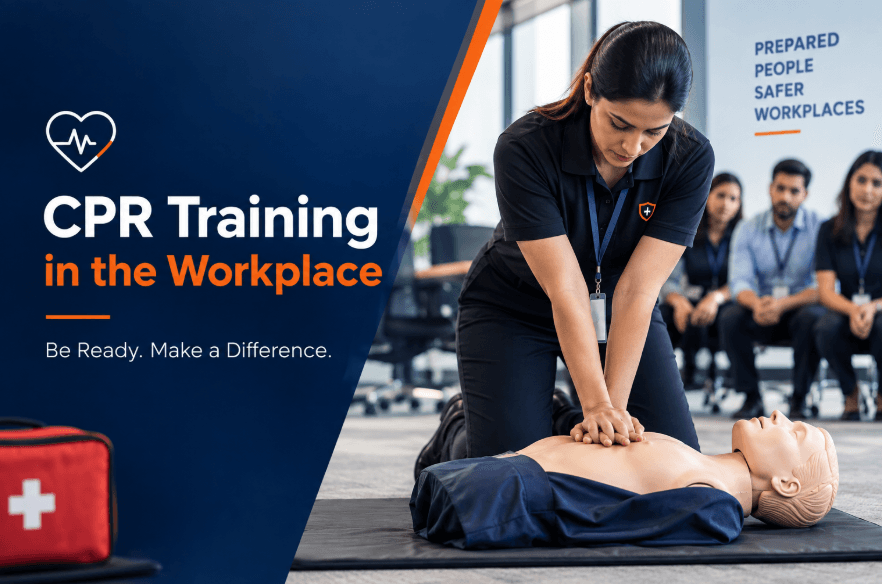
A medical emergency can happen anywhere even in a modern corporate office.
An employee may suddenly collapse during a meeting. A visitor may become unresponsive in reception. A colleague may experience a cardiac emergency while working at their desk, using the stairs, or participating in a workplace activity.
In such moments, professional medical help may take time to arrive. The first few minutes can be critical, and trained employees may be able to provide immediate support until emergency responders arrive.
This is why CPR training should be an important part of corporate workplace safety.
When every second matters, a trained employee can become the first link in the chain of survival.
What Is CPR?
CPR, or cardiopulmonary resuscitation, is an emergency procedure performed when a person is unresponsive and not breathing normally because the heart has stopped pumping effectively.
CPR helps maintain blood flow to vital organs until professional medical assistance or an automated external defibrillator arrives.
Workplace CPR training generally teaches participants how to:
Recognize a cardiac emergency.
Check responsiveness and breathing.
Call emergency medical services.
Begin chest compressions.
Use an automated external defibrillator.
Provide rescue breaths where appropriate and trained.
Respond safely until professional help arrives.
CPR should be learned through recognized training that includes practical, hands-on practice with manikins. OSHA guidance recommends hands-on CPR practice and encourages AED training when an AED is available at the workplace.osha+1
Why CPR Training Matters in Corporate Offices
Corporate workplaces often include large numbers of employees, visitors, contractors, and support staff. Medical emergencies can occur regardless of age, job role, fitness level, or department.
CPR training helps organizations:
Improve emergency preparedness.
Build employee confidence.
Reduce hesitation during a cardiac emergency.
Support faster first response.
Strengthen workplace safety culture.
Improve readiness for visitors and contractors.
Complement first-aid and emergency-response procedures.
Demonstrate care for employee well-being.
The American Heart Association states that immediate CPR and AED use can significantly improve survival chances during cardiac arrest.cpr.heart+1
CPR training is not intended to replace doctors, paramedics, or emergency medical services. Its purpose is to help trained employees take appropriate immediate action while professional help is on the way.
What Happens During a Cardiac Emergency?
A cardiac emergency may be sudden and confusing. A person may:
Collapse without warning.
Become unresponsive.
Stop breathing normally.
Breathe irregularly or gasp.
Have no obvious pulse for a trained responder to detect.
Show signs of chest discomfort or extreme weakness before collapsing.
Employees should not waste time trying to diagnose the exact medical condition. If a person is unresponsive and not breathing normally, they should activate the emergency response process immediately and follow their training.
The Basic Workplace CPR Response
A trained employee should follow the organization’s emergency procedure:
Check that the area is safe.
Check whether the person responds.
Call for help immediately.
Ask someone to contact emergency medical services.
Ask another person to bring the AED, if available.
Begin CPR according to training.
Follow the AED’s voice or visual instructions.
Continue until professional responders take over or the person shows signs of recovery.
Employees should know the organization’s emergency number, exact workplace address, AED location, first-aid kit location, and designated responders.
The Role of an AED
An automated external defibrillator, or AED, is a device designed to analyze certain abnormal heart rhythms and provide an electric shock when appropriate.
An AED does not replace CPR. It works together with CPR and emergency medical response.
A corporate AED program should include:
A clearly identified AED location.
Easy access during working hours.
Regular equipment inspections.
Battery and pad checks.
Trained employees.
Clear emergency instructions.
A process for contacting emergency responders.
Records of maintenance and use.
Periodic review of response procedures.
An effective AED program should train enough people so that someone capable of responding is available during working hours and across different shifts.heart
CPR Training Should Be Practical
Reading about CPR is not the same as performing it.
Effective corporate CPR training should include:
Instructor explanation.
Demonstration of CPR technique.
Hands-on chest-compression practice.
AED familiarization.
Emergency communication practice.
Scenario-based exercises.
Feedback from the trainer.
Practical assessment where applicable.
Participants should practise in realistic workplace scenarios, such as an employee collapsing in a meeting room, a visitor becoming unresponsive in reception, or an emergency occurring during a night shift.
Practical training improves confidence because employees experience the physical steps before facing a real emergency.
CPR Training for All Employees or Selected Teams?
Organizations can use different training models depending on their size, risk profile, working hours, and budget.
Option 1: Train all employees
This creates broad awareness and increases the likelihood that someone nearby can respond quickly.
Option 2: Train designated responders
The organization appoints employees from different departments, floors, shifts, and locations to form a workplace response team.
Option 3: Use a blended approach
The organization provides basic awareness to everyone and full hands-on CPR and AED training to designated responders.
For larger workplaces, multiple floors, remote locations, warehouses, factories, or 24-hour operations, the organization should plan coverage across different areas and shifts.
Creating a Corporate Cardiac Emergency Response Plan
CPR training becomes more effective when it is supported by a written response plan.
The plan should identify:
How to recognize a possible cardiac emergency.
Who calls emergency medical services.
Who retrieves the AED.
Who begins CPR.
Who guides emergency responders to the correct location.
The exact workplace address and access points.
The location of first-aid equipment.
Trained responders for each shift.
Procedures for visitors and contractors.
Post-incident documentation and review.
A cardiac emergency response plan helps employees understand their roles before an incident occurs. The American Heart Association describes a workplace cardiac emergency response plan as a written process that establishes specific steps for reducing deaths from cardiac arrest.heart
Common Workplace Barriers to CPR Response
Even when CPR training is available, employees may hesitate because they:
Fear doing something wrong.
Do not know whether the person needs CPR.
Are unsure whom to call.
Cannot find the AED.
Assume someone else will respond.
Feel uncomfortable helping a stranger.
Have never practised CPR physically.
Worry about legal or workplace consequences.
Good training addresses these concerns through clear instructions, practical scenarios, trainer guidance, and a supportive reporting culture.
The most important message is simple:
Doing something appropriate and calling for help quickly is usually better than standing by and waiting.
Employees should always follow their training, workplace procedures, and local emergency requirements.
Quick Questions and Answers
Q: Should every corporate employee learn CPR?
A: Ideally, all employees should receive basic awareness, while designated responders should receive practical CPR and AED training.
Q: Is CPR useful if the AED is not immediately available?
A: Yes, trained employees should begin CPR while another person calls for help and locates the AED.
Q: Can an AED shock someone incorrectly?
A: An AED analyzes the heart rhythm and provides a shock only when its programmed safety criteria are met.
Q: Should employees wait for a doctor before starting CPR?
A: No, they should activate emergency services and follow their training without unnecessary delay.
Q: How often should CPR training be renewed?
A: Renewal should follow the training provider’s certification requirements and the organization’s risk assessment; many recognized programs use a two-year renewal cycle.heart
Q: Can CPR training be conducted at the office?
A: Yes, on-site training can be adapted to corporate offices, meeting rooms, shifts, and workplace emergency procedures.
Q: Is CPR training only useful for health emergencies?
A: CPR training also improves overall emergency awareness and can be combined with AED, choking, and basic first-aid training.
What Should Organizations Do?
Organizations can strengthen CPR readiness by:
Conducting a workplace first-aid and medical-emergency risk assessment.
Training employees from different departments and shifts.
Providing hands-on CPR and AED practice.
Displaying the AED location clearly.
Maintaining first-aid kits and emergency equipment.
Publishing emergency contact numbers.
Including CPR awareness in employee induction.
Conducting periodic emergency-response drills.
Reviewing response performance after training or incidents.
Updating the plan when the office layout or workforce changes.
CPR training should not be treated as a certificate-only activity. The objective is to develop confidence, practical skill, teamwork, and fast decision-making.
Building a Life-Saving Workplace Culture
A safe corporate workplace protects employees from more than physical hazards. It also prepares people to respond to sudden medical emergencies.
When employees know how to recognize a cardiac emergency, call for help, start CPR, and use an AED, the organization becomes more prepared and resilient.
The strongest workplace culture is one where employees are willing to help, managers support emergency training, and leadership treats life-saving skills as a meaningful investment.
A CPR-trained workplace does more than meet a safety requirement, it gives people the power to act when every second counts.
One trained employee, one clear plan, and one timely action can make a life-saving difference.
- #cpr training
- #workplace cpr
- #corporate cpr training
- #aed training
- #first aid training
- #workplace safety
- #employee safety
- #emergency preparedness
- #cardiac emergency response
- #life-saving skills
Found this useful? Share it with your network.
How does your workplace measure up?
Twenty questions, two minutes, a score out of 100 and your three biggest gaps.