
Workplace Fire Safety: Turning Employees into Confident First Responders
A fire emergency does not give employees time to read a safety manual. Real workplace safety depends on preparedness, evacuation, emergency response and people knowing exactly what to do when seconds matter.
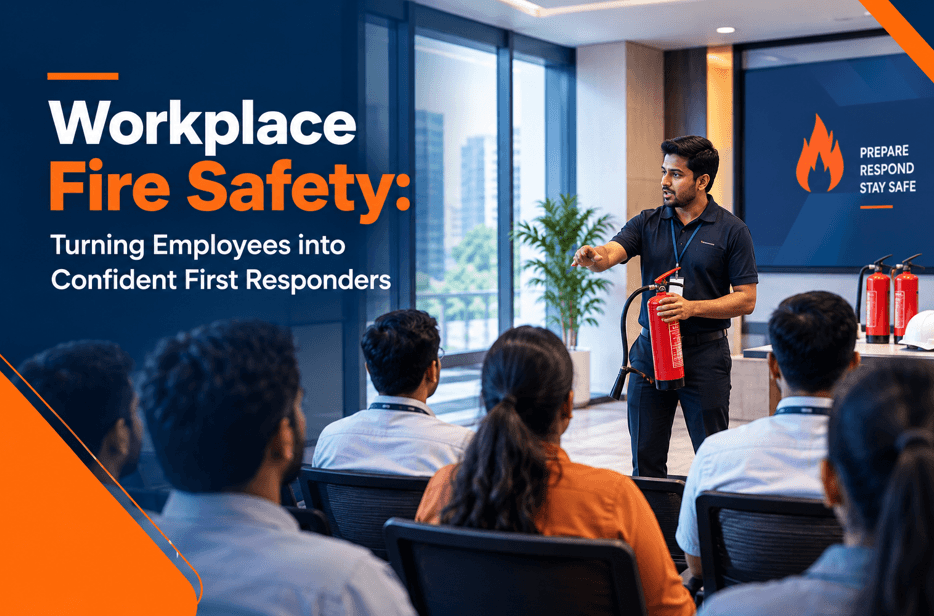
Fire Safety in the Workplace: Preparedness Saves Lives
A workplace fire can begin with one small spark but within minutes, it can threaten lives, destroy property, and stop business operations. That is why fire safety must be treated as a daily responsibility, not just an annual compliance activity.
Common causes of workplace fires include overloaded electrical sockets, damaged wires, unattended appliances, flammable materials, cooking equipment, smoking, and poor housekeeping. Organizations can reduce these risks by inspecting electrical systems, storing combustible materials safely, removing waste regularly, and keeping emergency exits, staircases, and corridors completely clear.
Every workplace should have a simple and practical fire-emergency plan. Employees must know how to raise the alarm, report the fire, use the nearest safe exit, reach the assembly point, and assist visitors or colleagues who need support. Fire extinguishers, alarms, emergency lights, and fire doors must be regularly checked and kept accessible.
During a fire, employees should remain calm, avoid elevators, leave personal belongings behind, and never re-enter the building without official permission. Only trained employees should attempt to control a small fire and only when a safe escape route is available.
Fire drills are equally important because practice reduces confusion and panic.
A fire does not give a warning before it spreads but proper training gives people the confidence to act before it is too late.
Fire safety is more than a rule; it is a commitment to ensuring every employee returns home safely.
Q: What is the first action when a fire is discovered?
A: Raise the alarm immediately and inform the responsible emergency team.
Q: Should employees use elevators during a fire?
A: No, employees should use the nearest safe emergency exit.
Q: Can everyone use a fire extinguisher?
A: Only trained employees should use one on a small fire with a clear escape route.
Q: Why are fire drills important?
A: They help employees practise evacuation and reduce panic during a real emergency.
Q: What should employees do if smoke blocks the exit?
A: Use an alternative route, stay low, and call for emergency assistance if trapped.
A fire does not give a warning before it spreads but proper training gives people the confidence to act before it is too late.
Fire safety is more than a rule; it is a commitment to ensuring every employee returns home safely.
- #fire-safety
- #workplace-safety
- #emergency-response
- #fire-drill
- #evacuation
- #safety-culture
- #employee-safety
- #emergency-preparedness
- #workplace-readiness
- #gujarat
Found this useful? Share it with your network.
How does your workplace measure up?
Twenty questions, two minutes, a score out of 100 and your three biggest gaps.